Fresh rollers are the quickest cure for a rattling door, and they lighten the load on the opener as well. A roller is a small wheel on a stem that sits in the hinge, rides inside the track and guides each section as the door travels. A typical door carries ten or more, and once the bearings dry out or the wheel flat-spots, each one drags, rattles and transmits vibration into the frame of the house.
Nylon rollers with sealed ball bearings are the usual upgrade. They run quietly because the plastic wheel does not ring against the steel track, and the sealed bearing keeps moisture and grit out. Manufacturer owner's manuals say to lubricate hinges, springs and bearings, but not to lubricate nylon rollers or the tracks themselves, so a quiet door that is oiled in the wrong place can pick up dirt instead.
While the rollers are out, we look at the hinges they sit in, because a cracked hinge leaf lets a roller wander and chew the track edge. We replace the worn hinges at the same time. The bottom rollers sit in the bottom brackets, which carry cable tension, so they are changed only with the door secured and the load off.
When the rollers have worn out
- The door rattles, squeals or rumbles as it moves
- You can feel vibration through the wall of the house
- Rollers wobble loosely in the track
- Flat spots or cracks show on the wheel
- The door jerks or hesitates at the track curve
- Black grit or old grease streaks the track
The Northern Virginia Freeze and Brine Factor
Rollers wear fastest where grit, moisture and temperature swings meet. A winter that dips to or below freezing on about 102 days a year at the Dulles airport station, followed by a humid summer with roughly 33 days at or above 90 degrees, hardens and softens grease and cracks cheap plastic. Road brine blown into the bottom of the tracks eats at steel wheels and their bearings.
For that reason we fit sealed nylon rollers on most doors rather than bare steel ones, and we leave the nylon dry. Steel rollers are still right for some heavy doors, and we say which suits yours.
How We Handle It
Listen and look
We run the door, find the noisy rollers, and read the hinges and track edges for damage.
Choose the roller
Sealed nylon for most doors, steel where the weight calls for it, with the exact price quoted on site.
Swap one at a time
Rollers are replaced section by section, hinges renewed where cracked, with the bottom brackets handled only after the door is secured and unloaded.
Clean, set, test
Tracks are wiped, only the parts that need lubricant get it, and the door is cycled until it runs quietly.
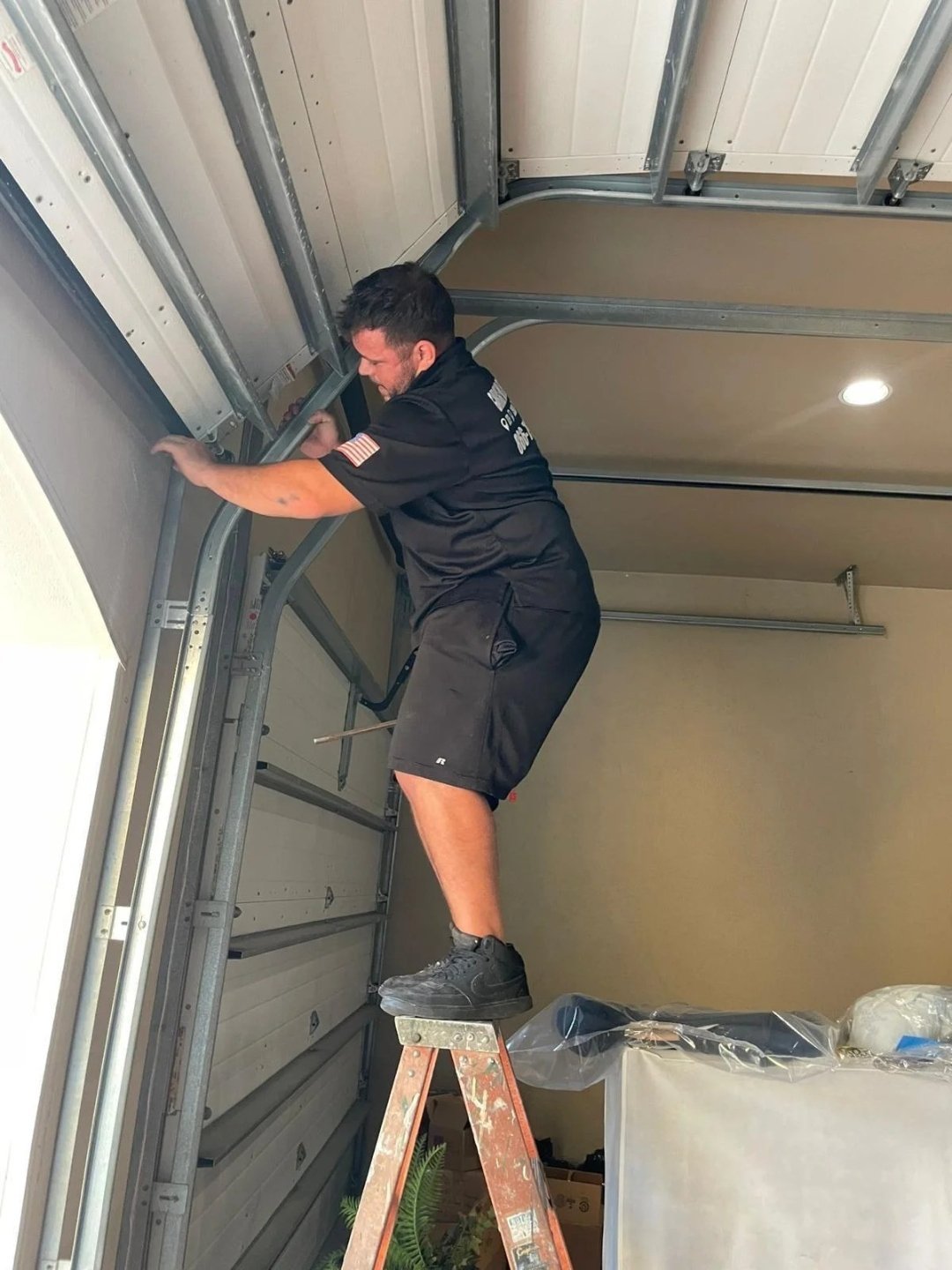
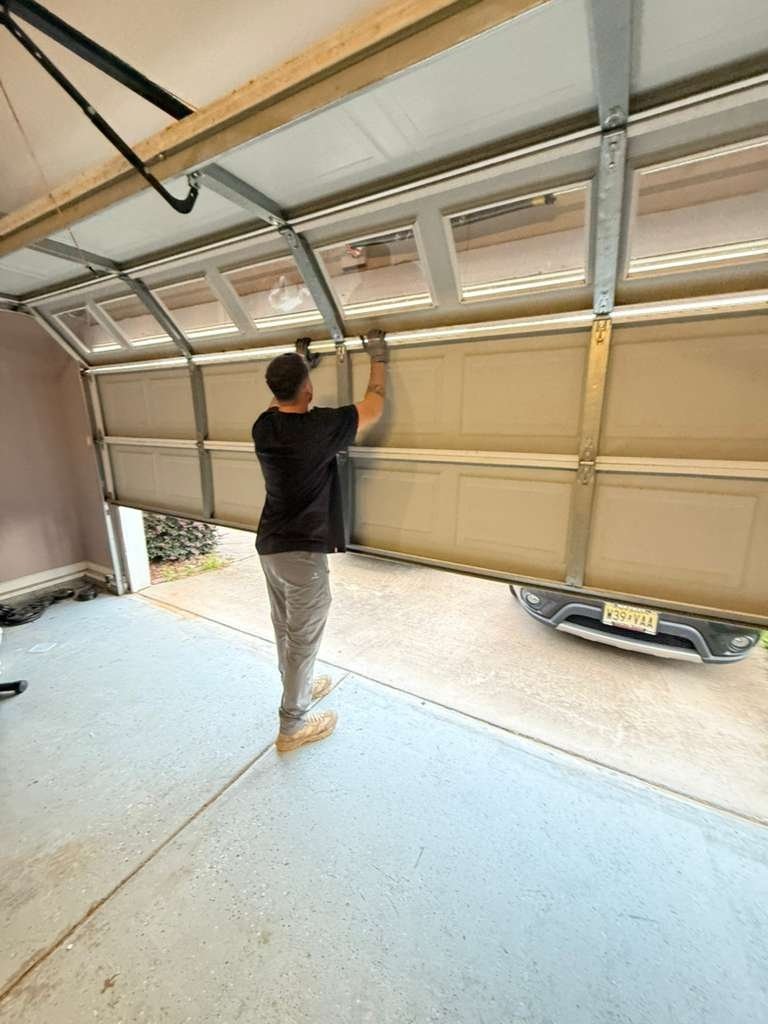
Roller jobs in pictures