A garage door opener that stops working is repaired once we know whether the opener or the door is at fault, because an unbalanced door can make a perfectly good opener seem to have died. Industry guidance is blunt on the point: openers are built to move a properly balanced door, and a stronger motor is never the answer to a heavy one. So we check the springs first, then the opener.
On the opener itself we work through the power supply, the logic board, the travel and force settings, the wall control, the remote receiver and the safety sensors. Every opener sold in the United States must begin reversing within two seconds of touching an obstruction, and must have a second protection system such as photo-eyes mounted no higher than six inches off the floor. Misaligned or dirty eyes, a worn gear or a failed capacitor are common causes of a door that closes then pops back open.
Where a board or gear set is cheaper to replace than the whole unit, we say so. When the opener is simply finished, we say that too and quote a replacement on site.
Ways an opener tells you it is failing
- The motor hums or clicks but the door does not move
- The door closes then reverses with nothing in the way
- Remotes work from the driveway only, or not at all
- The wall button works but the remote does not, or the reverse
- The light bulbs flash or the unit beeps with no explanation
- The door stops short of fully open or fully closed
The Northern Virginia Freeze and Brine Factor
Cold and power cuts account for much of what we see on openers here. About 102 days a year bring a low at or below freezing at the Dulles airport station, and weak remote batteries, stiff grease in the carriage and tight travel settings all show up first on cold mornings. Winter storms and summer thunderstorms can damage logic boards and cut the power with the door stuck wherever it happened to be.
Wet snow packed against the bottom seal makes a door heavier than the opener's force limit expects, which can read as a fault when it is only ice. We clear and test before we blame the unit, and we suggest battery backup for any household that cannot afford a stuck door during an outage.
How We Handle It
Check the door first
Balance and travel are tested with the opener disconnected, so a spring problem is never mistaken for a motor problem.
Isolate the fault
Power, board, limits, force, receiver and sensors are tested one at a time until the cause is certain.
Repair or replace, with a price
A part is fitted if repairing makes sense, or a replacement is quoted on site, before any work starts.
Reversing system verified
Photo-eyes aligned, sensitivity set, and the door tested against an obstruction on the floor before we hand it back.
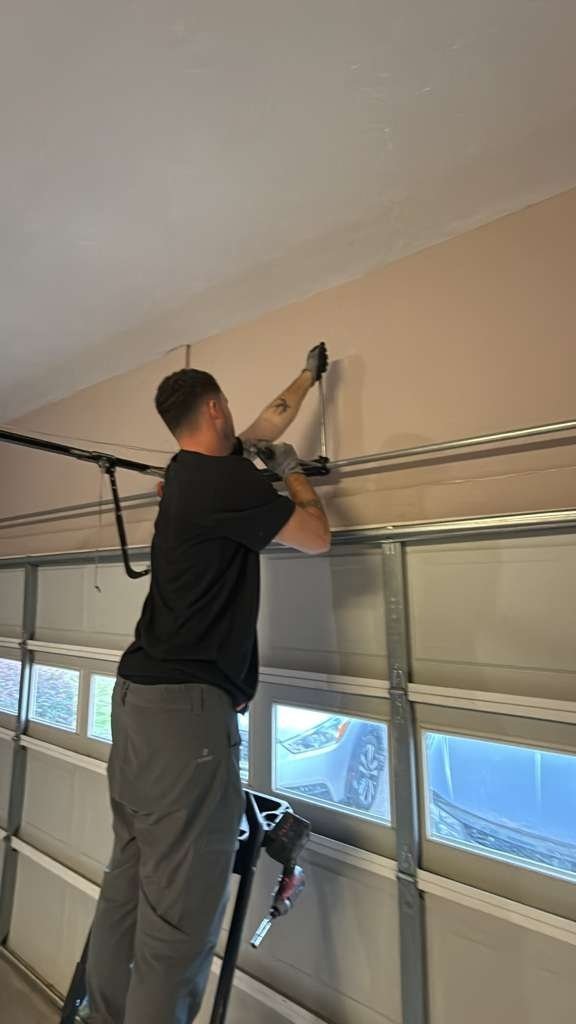
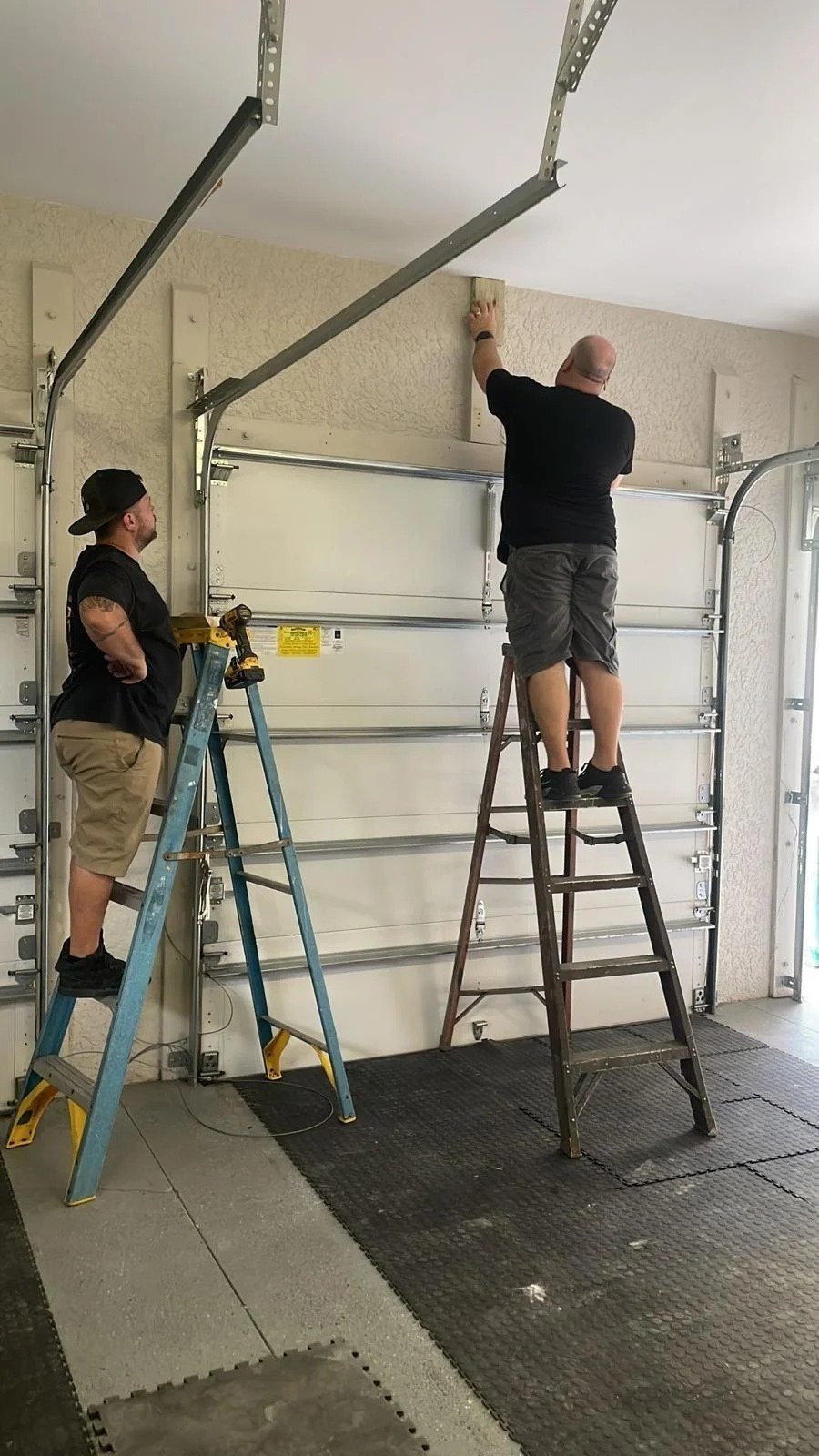
Opener jobs in pictures