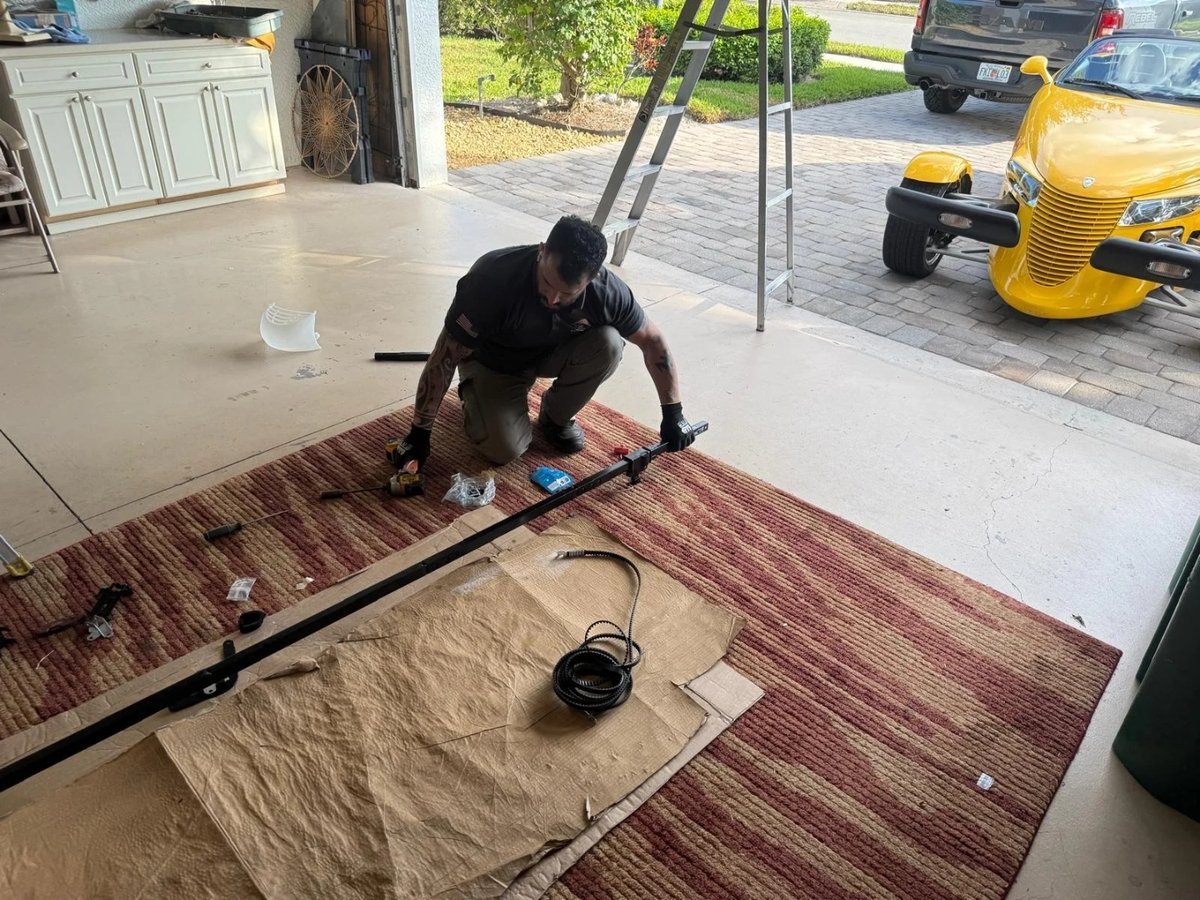
A garage door repair starts by finding which part is really failing, because springs, cables, rollers, tracks, hinges, the opener and the bottom seal fail in ways that look alike from the driveway. The door is one counterbalanced machine. Springs carry nearly all of its weight, and the opener only moves it. The trade association that writes the safety guidance says plainly that a heavy-feeling door needs its balance corrected, not a stronger opener.
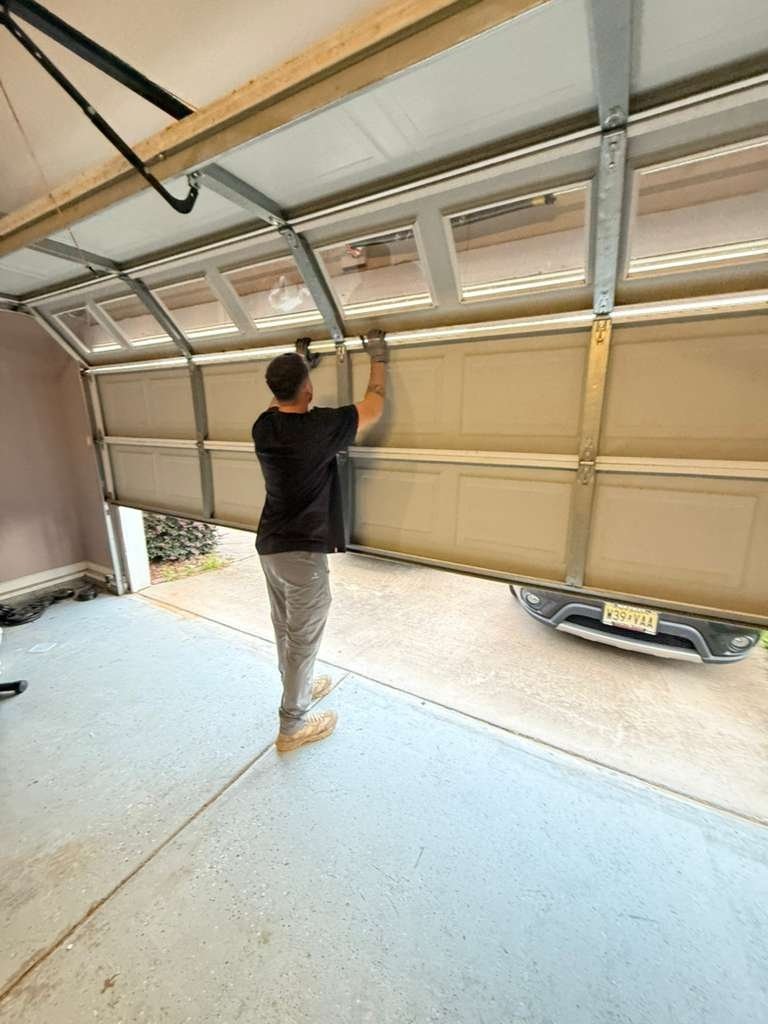
That is why we test balance first. With the opener disconnected and the door closed, a correctly balanced door lifts by hand with modest effort and then stays put roughly three to four feet above the floor. A door that drops or climbs on its own points at the springs, and everything else we find is judged against that result. We look at the cable ends, the roller stems, the hinge pivots, the track alignment, the reversing system and the weather seal in the same visit.
Most repairs finish the day we arrive, because the truck carries coated springs, sealed rollers, cables, hinges, sensors and common opener boards. You get one exact quote on site before any tool comes out, and the door is cycled and safety-tested before we pack up.
Hints the door wants a technician
- The door grinds, scrapes or shudders as it travels
- One side sits higher than the other and the gaps run crooked
- Stalls halfway or bounces back with the path clear
- A loud bang, then the opener hums without lifting
- Daylight or drafts show along the bottom edge when it is closed
- Hinges and brackets are streaked with rust
The Northern Virginia Freeze and Brine Factor
Northern Virginia gives a garage door two hard seasons. The Dulles airport station, about twelve miles west of our office, averages roughly 102 days a year with an overnight low at or below 32 degrees and about 33 days at or above 90 degrees, with 21 inches of snow in a normal year (NOAA 1991 to 2020 normals). Rubber seals stiffen and bond to a cold slab, and summer heat expands the sections and bakes dry grease out of hinges.
State crews pre-treat interstates and major roads with salt brine, so cars carry it home on their tires and undercarriage. It ends up on the bottom bracket, the lowest hinge and the foot of each track, which is where corrosion starts. We check those spots first and fit coated hardware where rust has already begun.
How We Handle It
Balance and inspection
Opener disconnected, the door lifted by hand and every moving part read against that result: springs, cables, rollers, hinges, tracks and seal.
Cause, then one quote
We tell you what failed and why, and quote the exact repair on site before any work starts.
Repair from the truck
Springs, rollers, cables, hinges and sensors are replaced with the coated or sealed versions that suit a freeze-and-thaw climate.
Tested before we leave
Balance rechecked, the opener's reversing system tested, then several full cycles with you at the door.
Photos of similar repairs