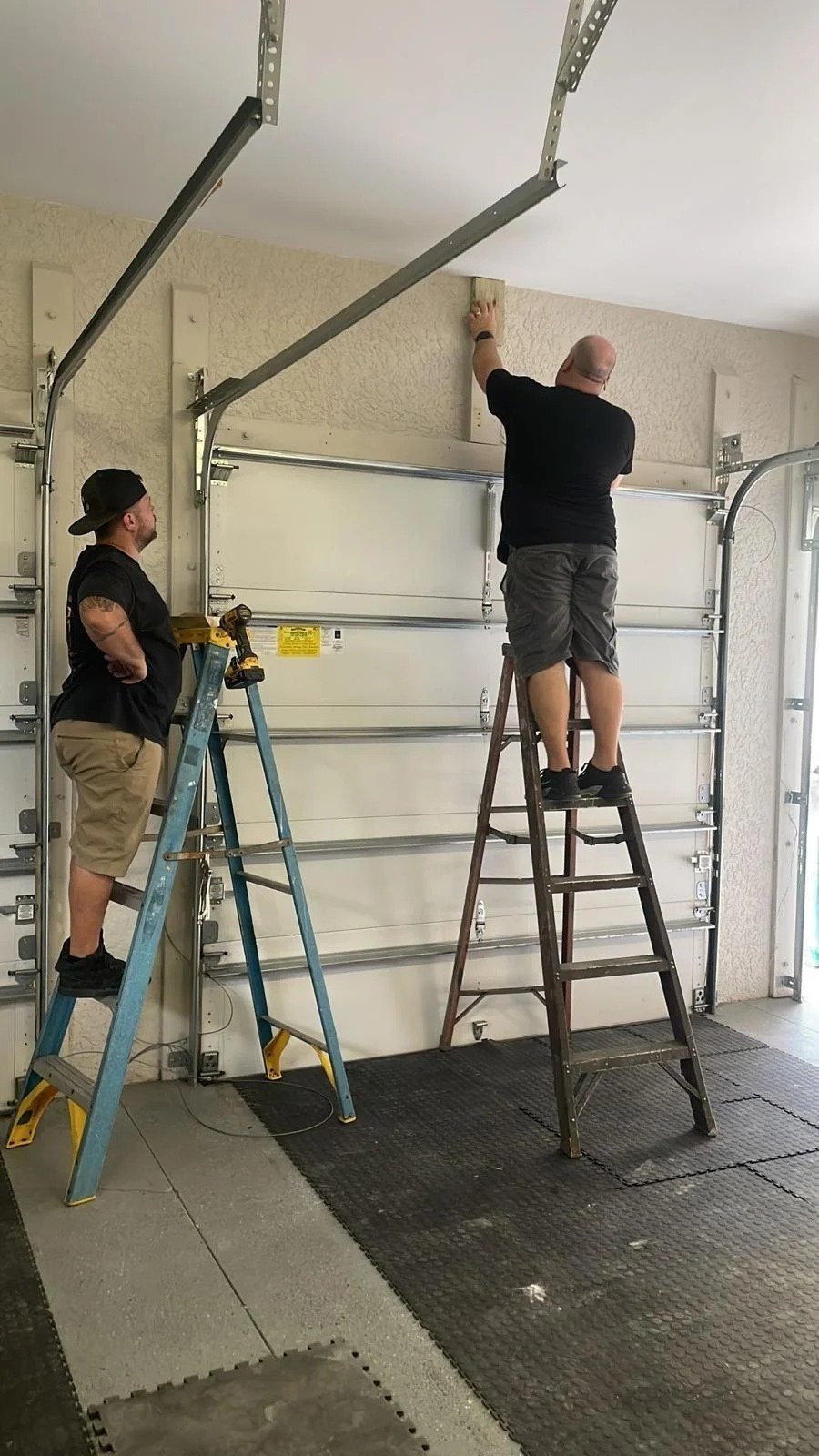
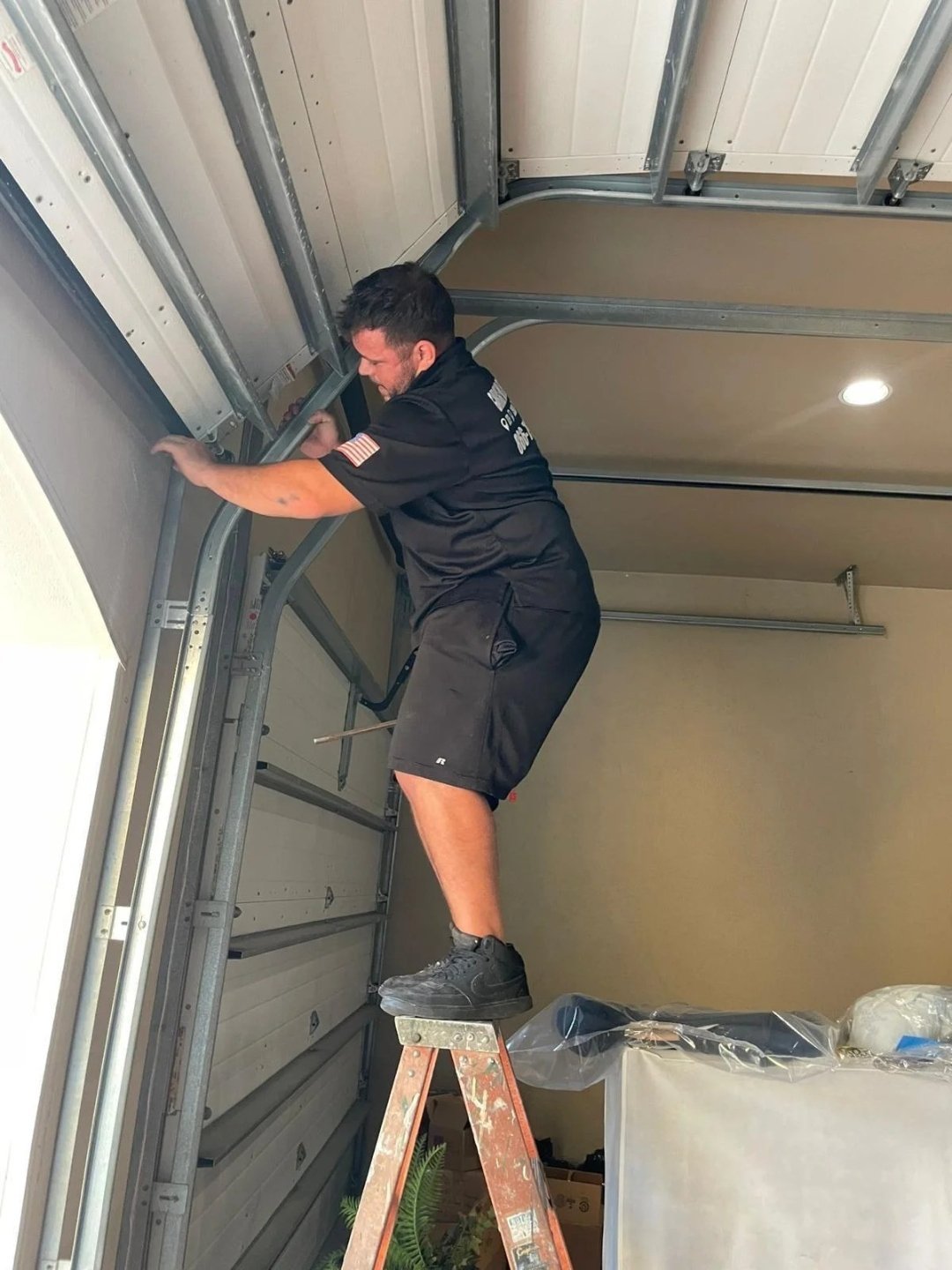
A new garage door opener should be installed on a door that is already balanced, with the top section reinforced and the safety sensors set low, otherwise even an expensive unit runs poorly. We check the springs and the track before we mount anything, add the reinforcement bracket that stops the opener from tearing the top section, and set the travel and force limits to the weight of the door.
The drive type decides how it sounds and how it ages. A chain drive is the sturdy, lower-cost choice and carries a heavy door well, but it is louder than a belt drive. A belt drive runs much quieter, which matters when a bedroom or a home office sits over or beside the garage. A screw drive has fewer moving parts and suits some doors, with more vibration. We explain the trade-offs for your garage and quote the installation on site.
Every opener is tested against the federal rule: it must begin reversing within two seconds of contact with a one-inch-high object on the floor, and the photo-eyes go no higher than six inches. The wall control is mounted at least five feet up, out of reach of children, and remotes are programmed with rolling codes.
Reasons to replace an aging opener
- The old opener is too loud for the room above or beside it
- The opener is a chain or screw model that rattles the house
- The unit lacks photo-eyes or a modern reversing system
- Remotes are lost, unreliable or use an outdated code
- A failed board or gear set costs more than a replacement unit
- You want battery backup so the door works in an outage
The Northern Virginia Freeze and Brine Factor
For an attached garage in a cold climate, drive type matters more than it does in a mild one. A belt drive keeps the noise away from bedrooms in homes where the garage sits under living space, and an insulated door with a quiet opener cuts the thermal bridge to the house. On unheated detached garages, a chain drive sheds cold and damp without complaint, though it needs occasional lubrication in the wet months.
Ice and wind storms can cut power for hours anywhere in the region, so battery backup is worth considering whenever the garage is the family's main entrance. We also fit the wall control and sensors high enough to stay clear of the slush and salt that blow in along the floor.
How We Handle It
Door and headroom check
Balance, track, the top section and available headroom are inspected so the opener suits the door and the garage.
Right unit, quoted on site
Drive type, horsepower class and extras such as battery backup are recommended and priced before anything is mounted.
Mount, wire and reinforce
Top-section bracket, rail, opener head, sensors and wall control are fitted to the manufacturer's instructions.
Set, program and test
Limits and force are set, remotes programmed, and the reversing system proven against a floor obstruction.
Opener installs in pictures